
AT THE HEART OF ISLAND LIFE
Cala d’Or, Mallorca
A Guide to Cala d’Or, Mallorca
By Claire Miller
23/07/25
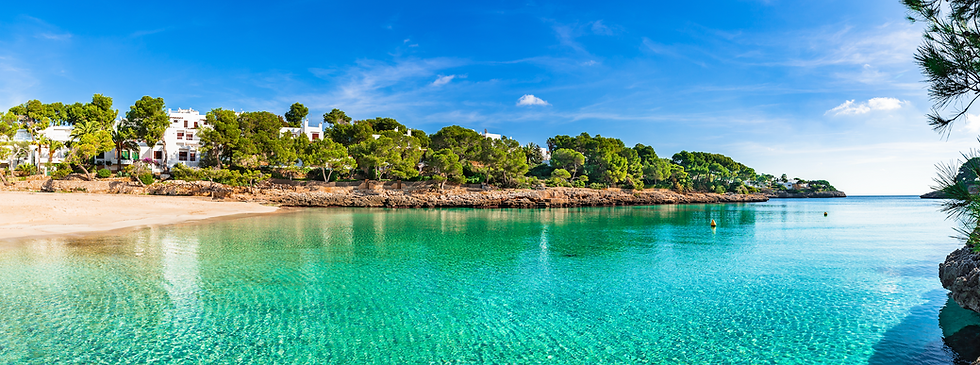
Cala d’Or, meaning “Golden Bay” in Catalan, is a gem on Mallorca’s southeast coast. Known for its whitewashed architecture, pretty pine-fringed coves, and laid-back Mediterranean charm, it has grown from a tiny fishing village into one of the island’s most beloved resort areas. Whether you’re looking for peaceful beaches, family fun, or vibrant nightlife, Cala d’Or has something to offer.
Geography and Highlights
Cala d’Or is part of the municipality of Santanyí. It sits roughly 60 kilometres from Palma de Mallorca’s international airport — about an hour’s drive through the island’s scenic interior. Cala d’Or isn’t just a single beach; rather, it’s a coastline dotted with small, sheltered coves known locally as “calas.” These include Cala Gran, Cala Esmeralda, Cala Ferrera, Cala Serena, Caló d’es Pou, and Cala Egos. The beaches are famous for their golden sand and calm, clear turquoise waters, which are ideal for swimming and snorkelling.
The town’s low-rise, whitewashed buildings were inspired by Ibizan architecture, a design vision led by the Ibizan artist and architect Josep Costa Ferrer in the 1930s. This architectural style gives Cala d’Or its bright, breezy atmosphere and a timeless charm that still feels authentically Mediterranean.
A Little History
Before tourism transformed Cala d’Or into a bustling resort, the area was little more than rugged coastline and pine forests. It began to develop in the 1930s when Josep Costa Ferrer and other visionaries saw its potential as a stylish seaside getaway. They designed a holiday village that blended harmoniously with the natural surroundings. Over the decades, it has grown steadily, but it remains more relaxed and low-key than some of Mallorca’s bigger resorts.
A reminder of the area’s older history is Es Fortí, a restored 18th-century fortress perched on the headland overlooking the sea. Originally built to guard against pirate raids, Es Fortí is now a peaceful lookout point with panoramic views of the coastline.

Things to Do and Places to Visit
The main reason people come to Cala d’Or is, of course, the beaches. Cala Gran is the largest and most popular, with sunbeds, umbrellas, and beach bars. Smaller coves like Cala Serena and Cala Esmeralda offer quieter escapes with the same calm, shallow water. These beaches are perfect for families, and the gentle sea makes them ideal for swimming and snorkelling.
Nearby Mondragó Natural Park is another highlight. Just a short drive away, this coastal reserve is one of Mallorca’s most beautiful protected areas, with walking trails through pine forests, hidden coves like S’Amarador and Cala Mondragó, wetlands rich in birdlife, and clear waters for snorkelling.
The Cala d’Or Marina is a hub of activity. Lined with palm trees, elegant yachts, and stylish restaurants, it’s a wonderful place to stroll in the evening. Here, you can dine al fresco with views of the boats, charter a catamaran or speedboat for a day at sea, or simply enjoy a sunset drink by the water.
If you’re feeling adventurous, Cala d’Or offers plenty of water sports. You can hire kayaks or paddleboards, join a glass-bottom boat trip along the coast, or take a snorkelling tour to discover hidden caves and marine life. Many visitors rent small boats for the day to explore the coastline independently — no license required for some types.
Families will find plenty to keep children entertained, too. Small amusement areas like Fantasy Park and Happy Park offer mini-golf, bouncy castles, and go-karts. A cheerful tourist land train shuttles visitors between the beaches and the marina during the summer season, adding to the holiday vibe.
For a taste of local history and sweeping island views, make a short trip inland to the Sanctuary of Sant Salvador, a 14th-century monastery perched on a hilltop near Felanitx. Another worthwhile stop is the medieval Santueri Castle, which dates back to Roman times and provides panoramic views over the southeastern coast.

Festivals and Events
Cala d’Or is not just about beaches and relaxation — it also has a lively events calendar. One of its best-known events is the Cala d’Or International Jazz Festival, which usually takes place in early May and has been drawing jazz musicians and fans from around the world since the 1990s. In August, the town celebrates its traditional folk festival with music, dancing, parades, and local food, offering visitors a glimpse of Mallorcan culture. The marina area often hosts seasonal open-air markets, live music events, and small boat shows throughout the summer months, adding to the town’s festive atmosphere.
When to Visit
The best time to visit Cala d’Or is late spring or early autumn, when the weather is warm and sunny but the crowds are thinner than in peak summer. July and August are the busiest months, especially on the beaches, but the lively buzz is part of the appeal for many families.
Cala d’Or has a gentle charm that appeals to a wide range of travellers. With its small sandy coves, whitewashed buildings, relaxed atmosphere, and a good mix of dining and nightlife, it remains a wonderful base for exploring Mallorca’s southeast coast. Whether you want to soak up the sun, discover nature, explore local history, or simply enjoy fresh seafood by the marina, Cala d’Or promises an easygoing Mediterranean escape with plenty to see and do.